
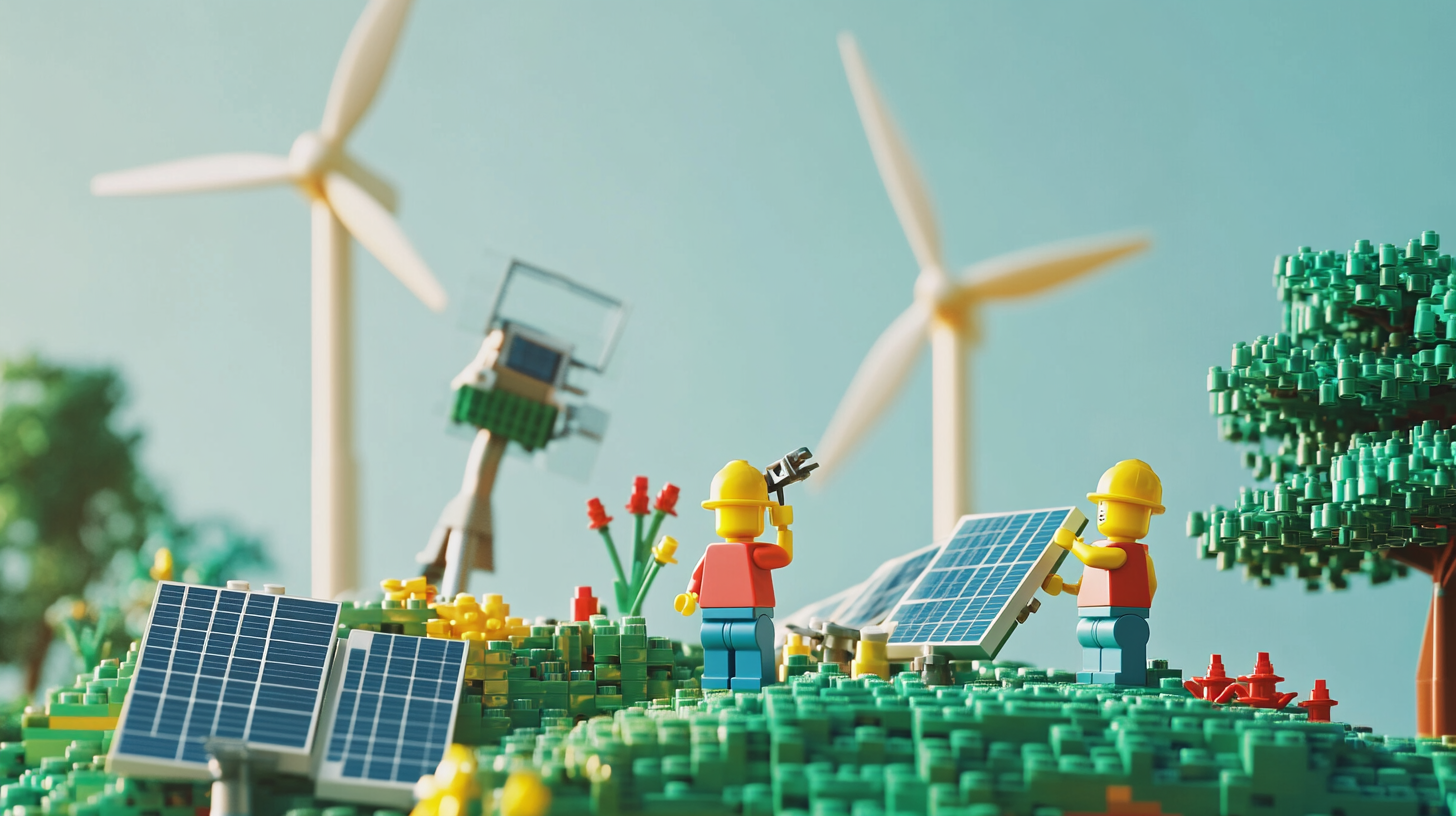
Plastic and Irony: Using Minifigs to Talk About Climate
There’s something weirdly perfect about using tiny plastic figures to talk about climate change. On one hand, they’re made of plastic, which is part of the problem. On the other, they’re familiar, funny, and weirdly effective at cutting through the noise. People pay attention to things that feel out of place. A tiny polar bear in a business suit standing in the middle of a shrinking ice shelf? That gets noticed.
Minifigs give artists and educators a way to say, “Hey, look at this,” without needing a whiteboard or a depressing graph. They speak a visual language. One that works on social media, in classrooms, or even just tucked into the corner of a bookshelf. It might be ironic, but sometimes irony works.
The Message in the Medium
It’s not lost on anyone that minifigs are made of plastic. So when you use one to represent the last surviving frog in the Amazon or the CEO of an oil company dancing on a burning map, the point sharpens itself. The message doesn’t hide. It leans into the contradiction. This is part of the power. Minifigs help deliver commentary without saying a word.
There’s also something about scale. Big problems are hard to grasp. Sea level rise, deforestation, methane — they’re overwhelming. But shrink the world down to a six-inch diorama with a minifig yelling into a cardboard megaphone and suddenly people get it. It becomes a story instead of a headline.
Satire in Small Pieces
People have used cartoons and puppets for decades to poke at power. Minifigs fit into that tradition. They’re recognizable, flexible, and sometimes ridiculous — and that makes them useful. I’ve seen artists build tiny protest scenes with minifigs holding signs like “No Planet B” or “This Was Fine” while surrounded by plastic flames. It’s funny, but it’s also not. And that tension sticks.
Some of the most biting commentary I’ve seen lately wasn’t a political cartoon or a think piece. It was a photo of a minifig scientist holding up a melted glacier chart while another minifig, dressed like a senator, looked the other way with a golf club. No caption. Just the image. People shared it more than any data thread I’ve posted in the past year.
And if you’re looking for options, minifig.biz seems to have all of the weird minifigs you can’t get elsewhere. Every time I check, there’s something new I didn’t expect to see. minifig.biz is where I’ve found astronauts in cowboy hats, grim reapers in suits, and forest rangers with worried eyebrows. You can build a whole narrative just with parts.
Classroom Conversations Without the Groans
Getting students to talk about climate change is hard. It’s abstract. It’s terrifying. It feels out of their control. But give them a set of plastic figures, a shoebox, and a prompt like “show me what climate denial looks like” — and they actually start building.
There’s something about putting problems into their own hands, literally, that makes them engage. Maybe it feels safer. Maybe it just feels less like school. Whatever the reason, I’ve watched kids get into deep conversations about pollution and greenwashing just from building a scene with little plastic characters.
And no, it doesn’t solve the climate crisis. But it creates a space to talk about it without turning it into a lecture or a fight. Sometimes that’s the win.
The Internet Loves Tiny Irony
Post a chart online and maybe a few dozen people will engage. Post a photo of a minifig in a snorkel standing on a flooded map of Florida and suddenly your DMs are full of questions. Why? Because people are visual. They like metaphors. They like humor. And they especially like things that surprise them.
Minifigs are like visual shorthand for satire. You can pose them, stage them, and photograph them faster than you can design a full digital infographic. And if you mess it up, you just swap the head or reposition the arms.
This makes them great for commentary. Quick, low stakes, and deeply adaptable. Want to say something about fast fashion? Throw together a pile of discarded minifig torsos under a neon runway. Want to talk about water rights? Pose a minifig with a water bottle on a cracked tile. It doesn’t need to be perfect. It just needs to be clever.
And that’s why I keep going back to minifig.biz. It’s not just that they have a big selection. It’s that their stuff sparks ideas. One minute I’m browsing for a project, the next I’m imagining a plastic beach cleanup where half the crew are pirates and the other half are aliens in lifeguard shirts. It sounds dumb. It kind of is. But it works.
Satire as a Survival Skill
We’re all exhausted. Climate fatigue is real. If you’re paying attention, it feels like we’re watching a slow disaster and yelling into a pillow. Satire doesn’t fix that, but it does give people a way to laugh while they scream.
Using minifigs is one way to do that. It’s small, sure. But it’s something. A way to say, “I see what’s happening, and I’m going to say something — even if it’s with a tiny plastic figure holding a melting globe.”
Sometimes humor is the only tool left that people will still pick up.